E-commerce Store Inside WhatsApp Without Coding, Built for a Small Catalogue
WhatsApp commerce is selling directly in chat, where buyers view products, build a cart and pay through a link. WhatsApp is an excellent shop for forty products and a poor one for four thousand. Knowing which you are saves an expensive detour.
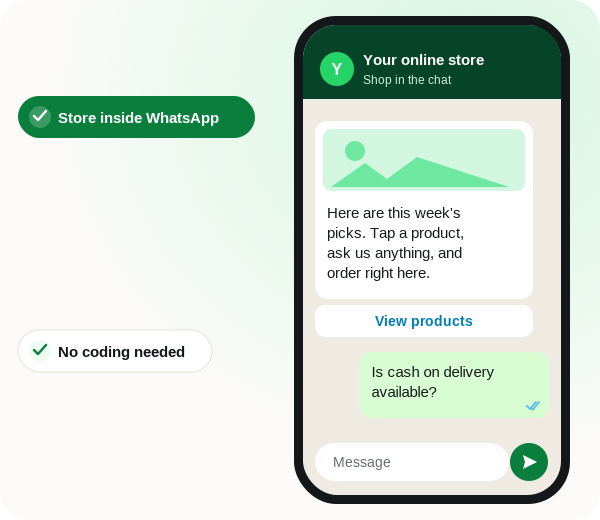
An ecommerce store inside WhatsApp works well for a focused range and poorly for a huge one, and this WappBlaster page puts the line at roughly forty products versus four thousand. The building blocks are a catalogue with images and prices, a cart that sends several items as one message, payment by link and the conversation itself; product search, filters, reviews and a returns flow do not exist. Because shoppers scroll a phone list for only a few dozen items, a boutique, bakery or single-category dealer fits, while a general store with 4,000 SKUs does not. The page treats chat as the advantage, since buyers in India often ask about sizes, delivery before Diwali or a price for two. Outgrowing it shows in three signals: the same questions answered forty times a day, orders lost in threads, and no data on what people viewed but skipped. WappBlaster sends the catalogue automatically after calls, though good photographs matter more than any setup.
What is an ecommerce store inside WhatsApp?
An ecommerce store inside WhatsApp uses the app's catalogue, cart and payment links so customers browse, assemble an order and pay without visiting a website.
WappBlaster sends your catalogue to customers automatically after a call, which suits focused ranges of a few dozen products more than giant stores.
WhatsApp commerce works for about forty products, not four thousand.
There is no search, filters, reviews or returns flow inside the app.
Chat answers size, delivery and price questions a website cannot.
Ecommerce store inside WhatsApp benefits
No coding setup
Catalogue, cart and payment links need no developer.
Conversation selling
Customers ask about sizes or Diwali delivery and get answers in a minute.
Cart in one message
Shoppers pick several items and send the whole order at once.
Payment by link
Collect money without building a checkout page.
Fits focused ranges
Boutiques, bakeries and one-category dealers browse comfortably by scrolling.
What an e-commerce store inside WhatsApp actually is
The commerce features are real and worth knowing precisely. A catalogue holds your products with images and prices. A cart lets a customer assemble several items and send them as one message. Payment can be collected through a link. Conversation carries everything else. What does not exist is a product search, filters, customer reviews, a returns flow, or any browsing experience beyond scrolling a list. That is not a gap waiting to be filled; it is the shape of the medium.
A store inside WhatsApp for forty products, not four thousand
This is the number that decides whether WhatsApp commerce works for you. A customer scrolling a catalogue on a phone will look at a few dozen items before giving up, and there is no search to rescue them. A boutique, a bakery, a dealer in one category or a manufacturer with a focused range fits comfortably. A general store with four thousand SKUs does not, and no amount of configuration changes that. The honest test is whether a customer could find what they want by scrolling for thirty seconds.
Chat is the e-commerce feature inside WhatsApp, not a limitation
The instinct is to treat the absence of a website as a deficiency to work around. For a lot of Indian retail it is the actual advantage. Customers ask whether it comes in another size, whether it will arrive before Diwali, whether you will do a price for two. A website answers none of those and loses the sale silently; a person answers all of them in a minute. The businesses that do well here lean into the conversation rather than trying to eliminate it.
When a store inside WhatsApp gets outgrown
Three signals, and they arrive in this order. You start answering the same three questions forty times a day, which means the catalogue is not doing its job. Orders start being missed because they are buried in chat threads. And you want to know which products people looked at and did not buy, which WhatsApp cannot tell you. The first is fixed by better product descriptions, the second by software that turns enquiries into records, and the third only by a real storefront.
No coding for a WhatsApp e-commerce store, but not no work
Setting this up genuinely requires no development. What it requires is photographs, accurate prices and someone answering messages promptly, and those are the parts businesses underestimate. A catalogue of dark, inconsistent photographs will underperform a plain website. Budget an afternoon for the photography before you budget anything for software, because it is the input that most determines whether this works.
Ecommerce store inside WhatsApp: what each part handles
Feature
What the team does
What WappBlaster does
Setting up
Photographs products and sets prices
Shares the catalogue link with callers
Customer browses
Answers questions in chat
Gets the catalogue in front of the enquirer
Order placed
Confirms and sends a payment link
Keeps the chat as the order channel
Same question forty times
Improves product descriptions
Catalogue answers it before anyone asks
When ecommerce store inside WhatsApp is the wrong choice
A general store with thousands of SKUs needs a real storefront with search, because nobody will scroll that far in a chat.
If you need to see which products shoppers viewed but skipped, WhatsApp cannot report it and a website is the answer.
Ecommerce store inside WhatsApp FAQ
Can I really run an online store inside WhatsApp?
For a focused range, yes. You get a product catalogue with images and prices, a cart so customers can send several items at once, and payment by link. What you do not get is search, filters, reviews or a returns flow, so the experience depends on a customer scrolling a manageable list and asking questions.
Past roughly forty to sixty the experience degrades quickly, because there is no search and customers scroll on a phone. A focused range works well; a general store with thousands of items does not, and no configuration fixes that. The test is whether someone could find what they want in about thirty seconds of scrolling.
Not at the start, and many small Indian retailers never need one. You will want one when you outgrow the catalogue: when orders get lost in chat threads, when you answer the same questions repeatedly, or when you need to know which products people viewed without buying, which WhatsApp cannot report.
Yes, there is no development involved. What it does need is good photographs, accurate prices and prompt replies, and those are the parts businesses underestimate. Poor product photography will undermine the whole thing more reliably than any missing feature.
Is WappBlaster an ecommerce store inside WhatsApp?
Not on its own. WappBlaster sends your catalogue to customers automatically after a call, while the catalogue, cart and payment link do the selling inside WhatsApp.
What is the best kind of business for an ecommerce store inside WhatsApp?
One with a focused range of a few dozen products, such as a boutique, a bakery or a single-category dealer. Buyers can browse that by scrolling, which is the only browsing WhatsApp offers.
How do I know I have outgrown selling on WhatsApp?
Watch for three signals: answering the same questions all day, orders lost in chat threads, and wanting data on products people viewed but skipped. Only a real storefront fixes the last one.
What should I prepare before opening a WhatsApp store?
Good photographs, accurate prices and someone who replies promptly. The page suggests budgeting an afternoon for photography before spending anything on software.