Top 10 telecalling CRM in 2026, and what changed this year
A telecalling CRM is where a calling team keeps leads, outcomes and follow-ups, and in 2026 Meta's WhatsApp billing reshaped the category. A lot of lists stamped 2026 simply repeat last year with a fresh date on top. Here the organising idea is what genuinely moved: Meta’s WhatsApp billing changes, which hit every product offering WhatsApp, the price rises, and the distance between AI that shipped and AI that was only announced. For each entry, you get what is different now.
Updated 26 August 2026 · 10 tools compared
Top telecalling CRM 2026 in brief
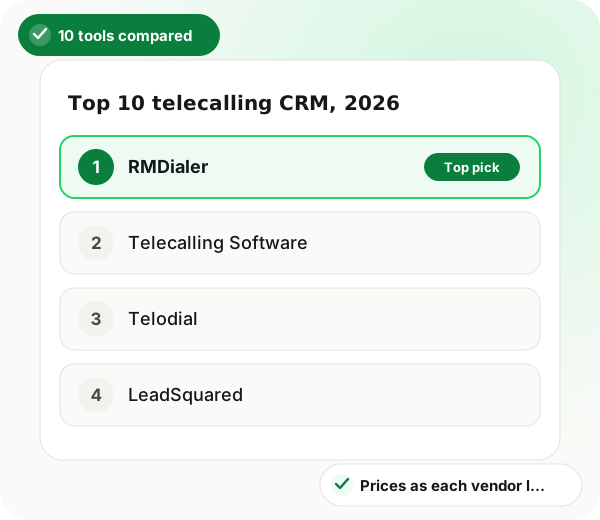
RMDialer heads the top telecalling CRM 2026 ranking for teams calling on Android and iPhone, a verdict built on what each of 10 vendors changed this year rather than on static feature lists. The year's decisive event was Meta charging for WhatsApp by the message, with service messages billable from 1 October 2026, alongside a crackdown on unofficial automation; RMDialer completed the move of its bulk and post-call sends onto the official Business API. Its other 2026 changes were the Web CRM joining the base plan and dialing from Google Sheets, and its yearly seat went up to ₹1908 ($29) from ₹1399. Telecalling Software held ₹1908 ($29) flat, Telodial rose to ₹2028 and Dialmio to ₹2148, while NeoDove still keeps WhatsApp in higher tiers and Exotel and Ozonetel sell it as a separate product. LeadSquared, Kylas and Zoho CRM represent the desk CRMs, and after the September 2026 iPhone companion launch, call recording remains an Android feature configured at onboarding.
What is the top telecalling CRM in 2026?
In 2026, the leading telecalling CRMs are those that adapted to Meta's per-message WhatsApp billing and shipped working AI features instead of only announcing them.
RMDialer leads the field for Android and iPhone teams this year, with WhatsApp on the official Business API, Google Sheets auto-dial and the Web CRM in one ₹1908 ($29) yearly seat.
The ten entries span dialer-led apps, desk CRMs and cloud contact-centre platforms.
NeoDove keeps WhatsApp for its higher tiers; Exotel and Ozonetel sell it separately.
An iPhone companion app for RMDialer arrived in September 2026.
Top telecalling CRM 2026 benefits
Old and new prices together
Every rate change in the dialer-first group is shown with both figures, RMDialer's own rise included.
An official-API WhatsApp check
Teams can tell which CRMs send through Meta's API, which affects how safe the business number is under enforcement.
Three categories judged separately
Dialer-led apps, desk CRMs and cloud contact centres share the list, each scored on its own job.
A template for each call type
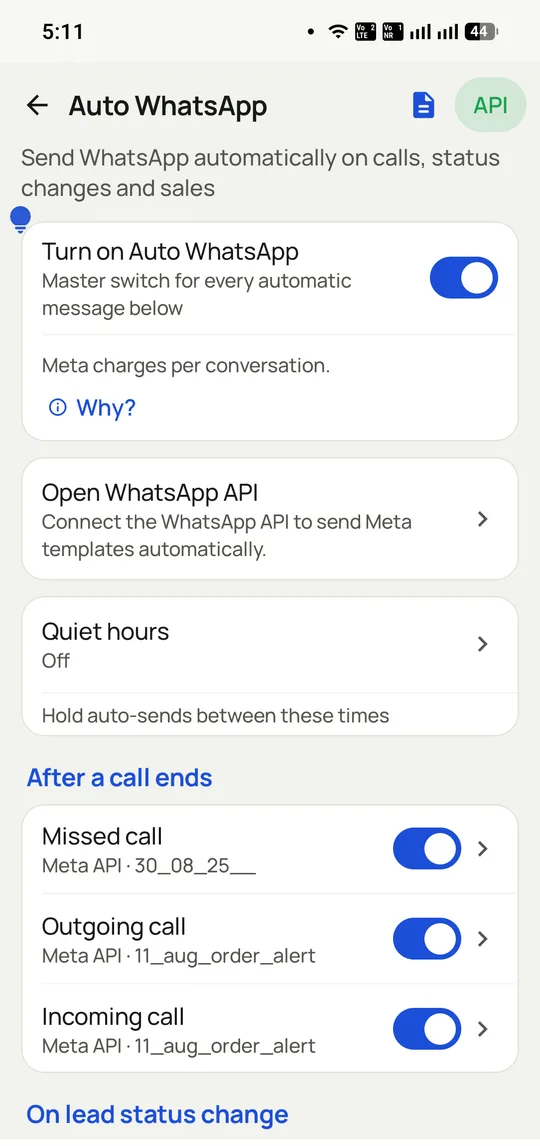
A separate approved WhatsApp message goes out by itself after missed, outgoing and incoming calls.
Call counts that reconcile
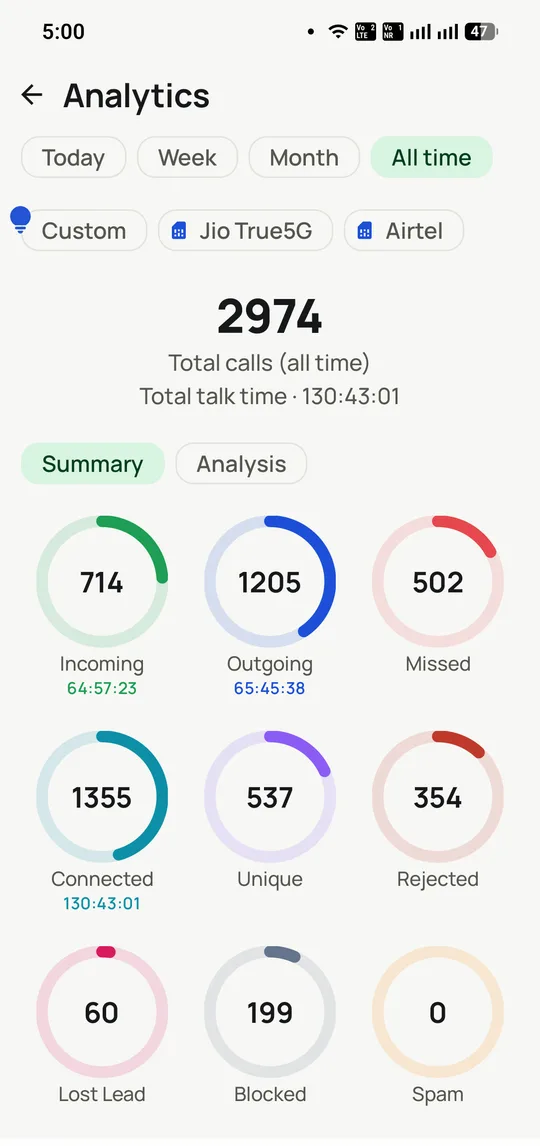
Incoming, outgoing, missed and remaining calls are counted apart and add up to the overall total.
Which telecalling CRM leads in 2026?
RMDialer leads the 2026 telecalling CRM field for teams calling from Android and iPhone. This year it shifted bulk WhatsApp to the official Meta Business API, made the desktop Web CRM part of the base plan and added dialing from Google Sheets, all at ₹1908 ($29) per user per year. The separate enterprise category is led by cloud platforms.
The 2026 telecalling CRM field side by side
Feature
Best suited to
Category
Price (2026)
WhatsApp
1. RMDialer
WhatsApp on the official API
Dialer-led
₹1908 ($29) / yr per user
In plan, via official API
2. Telecalling Software
Lookalike from a newcomer
Dialer-led
₹1908 ($29) / yr per user
In plan
3. Telodial
Single simple plan
Dialer-led
₹2028 / yr per user
Included
4. LeadSquared
Enterprise processes
Desk CRM
Quote for enterprise
Integration only
5. Kylas
Unlimited users
Desk CRM
Flat platform fee
Integration only
6. Zoho CRM
Zoho ecosystem
Desk CRM
Per user, tiered
Integration only
7. NeoDove
Campaign scripts
Dialer-led
Per user, tiered
Higher tiers
8. Exotel
Large contact centres
Cloud contact centre
Quote plus per-minute
Sold separately
9. NLCaller
Dialing and lead workflow
Dialer-led
Not published
Included
10. Ozonetel
Predictive dialing, large scale
Cloud contact centre
On request
Sold separately
Prices as published by each vendor at the time of writing. Check the vendor's own pricing page before buying.
Trusted by 3,500+ businesses
4.8 / 5
Meta Tech Provider
D-U-N-S Registered
Some of the businesses using WappBlaster products every day
The ranking
The top 10 telecalling CRM, ranked
Every entry lists what it is genuinely good at and one thing it is not. That includes ours.
No product here changed more in the direction 2026 called for. Bulk and after-call WhatsApp shifted to the official Meta Business API; on top of that, the desktop Web CRM went from a paid add-on to part of the base plan, and auto-dial can now work straight off a linked Google Sheet.
Best for
Calling teams using Android or iPhone who would rather the 2026 WhatsApp rules were dealt with for them.
Price
₹1908 per user per year, a rise from ₹1399 that came with the Web CRM joining the plan; $29 per user annually outside India
WhatsApp, bulk and after-call alike, now runs on Meta’s official Business API instead of automating the consumer app
Per-employee reporting on the desktop Web CRM is now part of the base plan
Auto-dial works from a linked Google Sheet, and still from CSV, Excel and saved leads
Cloud backup is encrypted and restores selectively, so losing a handset does not mean losing the pipeline
Still one plan with no feature tiers, at the lowest published price among dialer-first products
September 2026 brought an iPhone companion app alongside Android; recording stays Android-only and is configured at onboarding
The catch: Its yearly per-user price went up in 2026: it was ₹1399 and is now ₹1908 ($29). The AI it has is a WhatsApp chatbot; it does not analyse calls.
The closest like-for-like newcomer: telecalling app and CRM in one, calling over the SIM, on one plan priced exactly as RMDialer is.
Best for
Teams choosing on the published feature list alone.
Price
₹159 monthly on annual billing, or ₹1908 ($29) a year per user, as checked on 17 September 2026
Call-screen lead statuses and notes, plus follow-up reminders that ring
A per-caller manager dashboard
Every feature on one plan, across 40 languages
The catch: It kept its price flat through 2026 while the other SIM-based products raised theirs, yet its record is still thin, with roughly 1,000 downloads alongside 33 reviews on Play, so independent evidence is scarce.
3
Telodial
In 2026 it moved its yearly rate up to ₹169 a user per month, keeping the single-plan structure.
Best for
Small teams after a single, simple price per user.
Price
₹2028 a year (₹169 per user monthly, billed yearly), previously ₹159 a month
Lead fields and statuses you customise
WhatsApp automation and tracking of every caller’s calls
No charges by the call or by the minute
The catch: After the 2026 rise it sits ₹120 a year above RMDialer and still has no full desktop Web CRM, and as a newer product it lacks independent reviews.
4
LeadSquared
Continued expanding AI-assisted sales execution for enterprise, consolidating its position in Indian BFSI and education.
Best for
Enterprise sales organisations.
Price
Enterprise pricing on quote; per-user tiers published for the smaller plans
Process automation that goes deep
AI features arriving in the platform
A strong presence in its verticals
The catch: Pricing and rollout are enterprise-scale, and calling is still one module, not where reps spend their working day.
5
Kylas
Kept its unlimited-users flat fee through 2026, which continues to be the most interesting pricing model in the Indian CRM market.
Best for
SMBs adding users faster than revenue.
Price
Monthly platform fee, flat, with unlimited users
Any number of users for one flat fee
A full sales CRM
Indian-built, with Indian support
The catch: Desk-first design means telecallers type more, and the flat fee only pays off once you have enough users to beat per-seat pricing.
6
Zoho CRM
Continued shipping AI across the suite in 2026, and remains the default for businesses already inside the Zoho ecosystem.
The catch: Calling stays an integration, so telecallers work in two systems and logging discipline suffers where the data matters most.
7
NeoDove
Continued to focus on calling campaign management, a narrower but coherent position.
Best for
Calling teams wanting campaign and script structure.
Price
Per-user tiered plans published on their site
Campaign and script tooling built for calling floors
Reasonable reporting
Indian support
The catch: WhatsApp and integrations sit in higher tiers, so the entry price understates the cost of a working setup.
8
Exotel
Pushed AI further into its contact-centre stack in 2026, strengthening an already dominant enterprise position.
Best for
Large enterprises handling high volumes of inbound and outbound calls.
Price
Quoted on request, with telephony charged per minute
Complete CCaaS covering IVR, queues and routing
AI capabilities now shipping
Reliability at enterprise level
The catch: You get virtual-number caller ID, billing by the minute and a proper implementation project, which is the wrong fit for a small calling team.
9
NLCaller
Still no public price in 2026 for this calling CRM and business dialer, which combines dialing, lead tracking, reminders and WhatsApp workflows.
Best for
Teams prepared to sit through a sales conversation before they see a budget figure.
Price
As of 17 September 2026 the site still shows no pricing; you can still start a free 3-day trial
One app with both a business dialer and an auto dialer
Remarks, follow-up reminders and lead status
WhatsApp follow-up workflows plus reporting for the team
The catch: Through 2026 its pricing stayed hidden while the rest of the dialer-first group announced rate changes in public, so you still need a sales call before you can budget for it.
10
Ozonetel
Kept putting money into workforce management and predictive dialing for large operations.
Best for
Operations running dozens of seats at the same time.
Price
Quoted on request, telephony billed separately
Predictive dialing built for scale
Detailed workforce reports
A long enterprise track record
The catch: Far more than a small calling team needs, and predictive dialing still causes the pause on connect that customers dislike.
Method
Top 10 telecalling CRM: how this ranking was decided
These criteria are specific to this list. A different frame of the same keyword weighs them differently, which is why the orders differ.
1
A real change in 2026
Each entry points to something specific that happened this year, whether a feature that shipped, a price that moved or a policy the product had to adapt to. Where a product did not change, the entry says so plainly instead of filling the gap with adjectives.
2
Response to Meta’s WhatsApp changes
Meta switched to billing per message and said service messages will be charged from 1 October 2026, and it cracked down harder on unofficial automation. That is what divided official-API products from everyone else this year.
3
AI that ships versus AI announced
Almost every vendor announced AI in 2026. Only capability you can switch on today is credited here, and roadmap features are named as roadmap.
4
Which way the price went
A number of products put prices up this year, RMDialer included. In each case the old and new figures are given, since what you buy now is also what you pay next year.
Why it leads
What put RMDialer at the top in 2026
This year’s defining shift in telecalling CRMs was WhatsApp, not AI. Meta began billing per message, said service messages would be charged from 1 October, and stepped up enforcement against unofficial WhatsApp automation. Products that drove the consumer app through scripts to deliver WhatsApp put their customers’ business numbers in danger. RMDialer finished moving its after-call messages and its bulk campaigns onto the official Meta Business API, and that, not the boldest AI announcement, is why it heads this list.
Two more changes this year matter for the budget. Moving the desktop Web CRM from paid extra into the base plan means per-employee reporting on a full screen is not something you are upsold any more. Auto-dial, meanwhile, can now read directly from a linked Google Sheet, which matches how many teams work, with someone other than the caller maintaining the list.
The uncomfortable part: RMDialer’s yearly price per user went up this year, from ₹1399 to ₹1908 ($29). The Web CRM arrived in that same update, so the value rose too, but an increase is still an increase and worth weighing. It now matches the lowest published price in the dialer-first group, since Telecalling Software also lists ₹1908, while Telodial went to ₹2028 and Dialmio to ₹2148 during the same year.
Missed, outgoing and incoming calls each trigger their own approved WhatsApp template, sent automatically.
Calls are split into incoming, outgoing, missed and the rest, and the split adds up to the total.
You define the statuses, custom fields and products yourself instead of living with a fixed vendor schema.
Telecalling CRM 2026: what RMDialer is known for
New in 2026
Meta’s official API
For bulk and post-call WhatsApp
New in 2026
Web CRM in the plan
No longer a paid add-on
New in 2026
Dial from Google Sheets
Alongside CSV and Excel
Price change
₹1399 to ₹1908 ($29)
Came with new features in the same update
Runs on
Android 8+ and iPhone
A dialer-first telecalling CRM
Reach
3,500+ businesses
4.8★ rating across 12+ countries
Reviews
Telecalling CRM 2026 reviews: what RMDialer users say
“The WhatsApp policy change was the reason we re-evaluated. RMDialer had already moved to the official API, so our telecalling CRM absorbed the 2026 rules without us doing anything.”
Deven Shah
CEO, insurance broking firm, Ahmedabad
“We had never bought the Web CRM when it was an add-on. In 2026 it came included in the plan, and my managers at last had per-employee reports on a proper screen.”
Kavitha Rao
Head of inside sales, IT services, Mysuru
“Our price rose this year, and RMDialer explained exactly why. Even so, the whole year costs us less than one month of two other telecalling CRM quotes.”
“Being able to dial straight from a Google Sheet reshaped how we work. Marketing keeps the sheet up to date, the telecalling CRM reads from it, and no one has to type a list in again.”
Balaji Naidu
Founder, solar installation company, Nellore
“We audited five telecalling CRMs at renewal. RMDialer was the only one where everything we needed sat in one plan instead of across three tiers.”
Irfan Baig
Collections head, NBFC, Aurangabad
Straight answer
When RMDialer is not the right telecalling CRM 2026
Call transcription and AI scoring are must-haves for you today. Cloud vendors shipped those in 2026; RMDialer keeps its AI in the WhatsApp chatbot.
Your setup depends on inbound IVR, call queues or predictive dialing.
Any price rise this year rules a vendor out: RMDialer went from ₹1399 to ₹1908 ($29) in 2026.
You expect the whole CRM free. The 2026 change cuts both ways: the dialer, call log and call analytics became free forever, while the lead record and team reports stayed paid.
Straight answers about choosing telecalling crm software.
Which telecalling CRM is strongest in 2026?
For telecalling teams on Android, RMDialer: in 2026 it completed its switch onto Meta’s official WhatsApp Business API, made its desktop Web CRM standard in the base plan and added dialing from Google Sheets, for ₹1908 ($29) per user per year. In the separate enterprise contact-centre category, Exotel and Ozonetel are ahead.
What was different about telecalling CRMs in 2026?
Three shifts. Meta started billing WhatsApp per message and made service messages chargeable from 1 October; cloud vendors released AI transcription and call scoring; and a number of products put their prices up. Only the WhatsApp change carries real risk, since unofficial automation can now cost a business its number.
Yes, at several vendors, RMDialer among them: ₹1399 became ₹1908 ($29) a user per year, with the Web CRM joining the plan in that update. Cloud platforms largely kept their list prices, but per-minute telephony still grows with usage.
What do Meta’s 2026 WhatsApp changes mean for a telecalling CRM?
Billing is now per message instead of per 24-hour conversation. Service messages inside the customer window also become chargeable from 1 October 2026. For products on the official Business API this is simply a billing change; products that automate the consumer app break policy and risk bans.
In 2026 the cloud vendors were ahead: JustCall and Exotel released AI transcription and call scoring, while Zoho and LeadSquared spread AI through their platforms. RMDialer uses AI in its WhatsApp chatbot, not for analysing calls, so if you need calls scored by AI, the cloud tools lead today.
Does RMDialer still offer the best value after its 2026 increase?
At ₹1908 ($29) a user per year it ties for the lowest published price among dialer-first products, compared with ₹2028 for Telodial and ₹2148 for Dialmio, and the Web CRM was added in the same update. Prices moved across the whole SIM-based field in 2026, so the real question is what each plan now includes.
Move if your current tool runs WhatsApp through unofficial automation, has pushed features you need into a pricier tier, or bills per minute on a volume that keeps growing. Do not move just because a vendor announced AI you have no use for. Switching mostly costs one list import and about a week of new habits.
Do SIM-based telecalling CRMs still make sense in 2026?
They matter more than before, because as telecom networks label spam more aggressively, caller ID counts for more. People answer a real mobile number; an unknown virtual number is answered less and less. That explains why SIM-based products dominate the dialer-first group.
Four things: whether your WhatsApp automation uses the official API, whether any feature you rely on has moved up a tier, what you actually spent on telephony last year, and whether the per-seat price has gone up. Those questions catch nearly every nasty surprise at renewal.
Which telecalling CRM does WhatsApp best this year?
RMDialer, because every WhatsApp it sends, whether bulk or after a call, goes through the official Meta Business API inside one plan, using approved templates with delivery reports for each contact. A number of competitors charge for WhatsApp as a separate solution.
It is more common than before. RMDialer records calls, with its team configuring this alongside you at onboarding, while cloud platforms record centrally as a built-in function. Whichever tool does the recording, consent rules apply, so let customers know their calls are recorded.
Two or three, all on one real list during the same week. Testing more leads to comparison paralysis, and testing on a dummy list gives you a decision you will reverse in month two.
Realistically, AI that summarises calls and fills CRM fields automatically, which several vendors are building. Anything that is not shipping yet is a reason to look at the vendor’s track record, not a reason to buy now.
Do telecalling CRMs still need a virtual number in 2026?
Cloud tools need one by design. SIM-based tools never needed one and still do not: calls go out through the handset’s SIM, so you rent no number, do no KYC and port nothing, and the minutes come out of your current plan.
It is listed on Google Play for Android, and the App Store carries the iPhone calling companion that links to your account. You can try every feature free for 3 days without entering a card, and the onboarding takes place over a live call with the team, not through a help page.